How to Sell Digital Products With Crypto: A Practical USDT Guide
Learn how to create, price, publish, deliver, and promote a digital product with USDT checkout while building a search-friendly product page.
Billixi Editorial
Marketplace education team

Direct answer
To sell digital products with crypto, start with one useful deliverable for a specific buyer, publish a clear canonical product page, price the offer accurately in USDT, and connect payment to the correct private delivery workflow. Keep drafts and checkout pages out of search, submit the finished product for review, and use helpful content plus eligible affiliate links to send qualified buyers to the public product page.
Selling a digital product with crypto is not just adding a wallet address to a download page. A reliable offer connects five things: a real buyer problem, a finished deliverable, an accurate public product page, confirmed payment, and private delivery.
Billixi's digital-product solution is built around that complete path. The public listing becomes the page buyers, search engines, AI assistants, and eligible promoters can understand. Checkout handles the USDT payment step, while the buyer-access workflow handles the private file or entitlement.
In this guide
- The seller process at a glance
- Choosing the right digital-product model
- Validating the buyer problem
- Writing the public product page
- Pricing accurately in USDT
- Manual versus automated delivery
- Review, canonical URLs, and promotion
- Seller launch checklist
The process at a glance
- Choose one buyer and one problem. Avoid a product made for everyone.
- Create the smallest useful deliverable. Finish and test the actual file or access experience.
- Define the delivery model. For new Billixi offers, choose a downloadable file or software license. Membership entitlements describe legacy purchases only; new Telegram and Discord offers are unavailable.
- Write a complete public offer. Explain the outcome, contents, format, limits, seller, and USDT price.
- Submit the finished version for review. The reviewed version should match the version you plan to deliver.
- Publish one canonical product page. Use that URL in content, social posts, communities, and affiliate campaigns.
- Improve from qualified behavior. Watch buyer questions, conversion, support requests, refunds, and repeat interest.
This order matters. Promotion cannot rescue an unclear product, and a polished page cannot compensate for a missing or unreliable deliverable.
Choose a product that can be explained clearly
Digital products are attractive because they can be delivered without physical shipping, but they still create operational work. Choose a format that matches your skill, available support time, and buyer expectations.
| Product model | Buyer receives | Main seller responsibility |
|---|---|---|
| Ebook or practical guide | A readable digital file | Accuracy, structure, and useful examples |
| Template or prompt pack | Reusable files and instructions | Testing the workflow in realistic cases |
| Course or resource pack | Lessons, files, or organized access | Clear scope and maintained resources |
| Software download | A release or tool | Compatibility, updates, safety, and support |
| Software license | A license entitlement and downloadable software file through Billixi | License terms, activation, file rights, and release integrity |
| Existing paid membership | Time-based community access | Existing subscriptions retain provider, renewal, expiry, and recovery support; new offers are unavailable |
If you are still choosing a format, compare the best digital products to sell. Billixi does not accept new Telegram or Discord membership offers; current members can read the service update. For licensed applications, see selling software licenses online.
For file-based offers, the supporting playbooks cover four common decisions in depth: ebooks and PDFs, digital art and design assets, printables, and automated delivery after payment.
Catalog snapshot, reviewed September 4, 2026: the live Billixi public catalog contained 62 products when this guide cluster was planned: 25 Ebooks, 19 Design products, 6 AI products, 5 Templates, and 7 across the remaining categories. This dated snapshot describes that crawl only; current product cards and prices below come from live catalog data and may change.
Validate the buyer problem before building the full product
Do not treat search volume, likes, or AI-generated idea lists as proof of demand. Look for evidence that a specific group already spends time, money, or effort trying to solve the problem.
Useful validation signals include:
- repeated questions in a focused community;
- buyers using an awkward manual workaround;
- existing alternatives with clear complaints;
- people willing to review a sample or join a waitlist;
- a small number of relevant visitors taking a meaningful next step.
The goal is not to prove that everyone wants the product. It is to reduce uncertainty enough to build a small, useful first version. The AI product validation guide provides an evidence-first process that also works for non-AI products.
Build the public product page around buyer questions
A high-quality product page should answer the questions a careful buyer would ask before payment:
- Who is this product for?
- What problem does it solve?
- What exactly is included?
- Which file format, version, platform, or access period applies?
- What does the buyer need to use it?
- How and when is it delivered?
- What support or updates are included?
- What is the price in USDT?
- Which limitations should the buyer understand?
Use a specific title and a unique description. Show the actual deliverable or a truthful preview. Avoid generic claims such as “best,” “guaranteed,” or “instant income” unless you can define and support them.
For search and GEO, the strongest page is usually the most explicit page. A short direct answer near the top, descriptive headings, comparison tables, FAQs, seller identity, and consistent product facts make the offer easier for both people and retrieval systems to interpret.
Describe USDT pricing accurately
USDT is a stablecoin, not the ISO fiat currency USD. If the product price is 25 USDT, display 25 USDT on the offer and in checkout. Do not silently relabel it as $25 USD for search snippets or structured data.
Accurate currency language helps prevent three problems:
- buyers assuming a card or fiat checkout that is not offered;
- inconsistent amounts between the product page and payment step;
- misleading structured data that describes a different currency from the real transaction.
Choose the starting amount from the buyer outcome, the quality of the deliverable, support burden, alternatives, and refund risk—not from the fact that payment uses crypto. Use the digital-product pricing framework to design a defensible starting price and genuinely different tiers.
Connect payment to the correct private delivery
The public product page should explain delivery, but it should not expose private files, membership links, license keys, or buyer-specific entitlements.
A clean flow is:
- the buyer reviews the canonical public listing;
- the buyer continues to the existing crypto checkout;
- payment confirmation updates the purchase state;
- the correct private delivery workflow becomes available;
- the buyer can return to an authenticated library or access surface;
- support can see the difference between payment, delivery, and provider problems.
This separation is especially important when an external provider is temporarily unavailable. A paid purchase should remain recorded even if fulfillment needs a safe retry.
Choose manual or automated delivery deliberately
Manual delivery can be acceptable for a small validation pilot when the buyer is told what to expect. It becomes fragile as volume grows because each order depends on a person finding the right payment, file, version, and recipient. Automation is worthwhile when it creates a durable purchase and recoverable access—not merely when it sends a fast email.
| Delivery model | Main advantage | Main limitation | Appropriate use |
|---|---|---|---|
| Manual email or message | Low setup effort | Delays, mistakes, exposed attachments, weak repeat access | A small, clearly disclosed pilot |
| Automated email link | Familiar buyer experience | Inbox failure and forwarded or expired links | Low-risk files when the link still checks authorization |
| Authenticated buyer library | Durable status and repeat access | Requires account and entitlement design | Marketplace products and maintained catalogs |
| Provider-managed access | Fits memberships or licenses | Provider outages require reconciliation | Products whose value lives in the connected provider |
Whichever model you choose, preserve the accepted purchase when delivery is delayed. Retrying the same confirmation should converge on the same entitlement, not create another order or unlock the wrong variant. The automated delivery guide provides a complete state and testing checklist.
Review the exact version you plan to sell
The listing, its claims, and the deliverable should describe the same product version. A draft is not automatically public, and a material file change should not inherit trust from an older release without the applicable checks.
Read how Billixi reviews digital products before submission. License products must deliver the actual software file through Billixi and complete applicable file-safety and publication checks. Existing Membership purchases continue through their connected-provider lifecycle controls.
Use one canonical URL for SEO, GEO, and conversion
Do not divide the same offer across several nearly identical pages. Use the approved product listing as the durable destination and build supporting content around it.
A practical internal-link structure looks like this:
- a broad Solutions hub helps visitors choose a workflow;
- the sell-digital-products solution explains the model;
- guides answer specific educational questions;
- the individual product page describes the exact commercial offer;
- social posts and eligible promoter links point buyers toward that product context.
This structure helps each page do one job. The solution page targets the workflow, the guide targets the question, and the product page targets the actual purchase decision.
Add affiliate distribution only after the offer is clear
When affiliate promotion is enabled and the product and promoter are eligible, a tracked link can carry attribution while the canonical product page carries the explanation and trust signals.
Choose promoters whose audience already cares about the problem. Tutorials, comparisons, use cases, and honest reviews generally create stronger buyer intent than bulk follows, generic comments, or unsolicited mass direct messages. Read the digital product affiliate network guide before setting a commission or recruiting partners.
Common mistakes to avoid
Sending buyers straight to an unexplained payment step
Checkout is not a substitute for a complete offer. Buyers and search systems need product context first.
Publishing a thin page for every minor variation
Combine variations that represent the same core offer. Create separate indexable pages only when the buyer intent and deliverable are meaningfully different.
Hiding the real delivery conditions
State file format, platform, version, access period, dependencies, and important limitations before payment.
Treating crypto as the product benefit
Crypto is the payment method. The reason to buy must still be the outcome delivered by the product.
Promising rankings, sales, or income
No marketplace, affiliate network, or SEO tactic can guarantee revenue. Use measurable product facts and realistic expectations.
Seller launch checklist
- One specific buyer and problem are defined.
- The finished deliverable works without private seller assistance.
- The product type matches the delivery method.
- The title and description are unique and specific.
- The page states exactly what is included.
- The visible amount is labeled in USDT.
- Private files and entitlements remain outside the public page.
- The exact version has completed applicable review steps.
- One canonical product URL is used across campaigns.
- Refund, support, update, and access expectations are clear.
- Affiliate promotion is enabled only when the offer is ready for distribution.
- Manual or automated delivery was chosen intentionally and disclosed accurately.
- Confirmed payment, delayed fulfillment, repeat access, and safe retry states were tested.
Frequently asked questions
Can I sell any digital file with crypto?
No. The product must fit the marketplace rules, match its declared delivery type, and complete the applicable review process. The seller also remains responsible for rights, accuracy, buyer expectations, and support.
Should a USDT price be shown as USD?
No. If checkout uses USDT, the offer should say USDT. A stablecoin price should not be relabeled as fiat USD merely to fit a search or schema field.
Which page should I promote?
Promote the canonical public product page for the exact offer. Use educational guides and the relevant solution page to explain the broader workflow, then link qualified visitors to the product.
Does crypto checkout make a product automatically indexable?
No. Indexing depends on a public, crawlable, useful page and search-engine decisions. Drafts, authentication, checkout, and private buyer-access routes should not be treated as acquisition pages.
The practical starting point is simple: create one product worth explaining, publish one page worth referencing, and keep payment and delivery accurate. Explore the full Billixi digital-product workflow when you are ready to turn the plan into a public offer.
Examples from the live marketplace
Related digital products
Explore up to three currently public products that match this guide. Prices come from the live catalog.
Telegram Mini App Storefront Template
99 USDTA live digital-product example with a public offer and private buyer delivery.
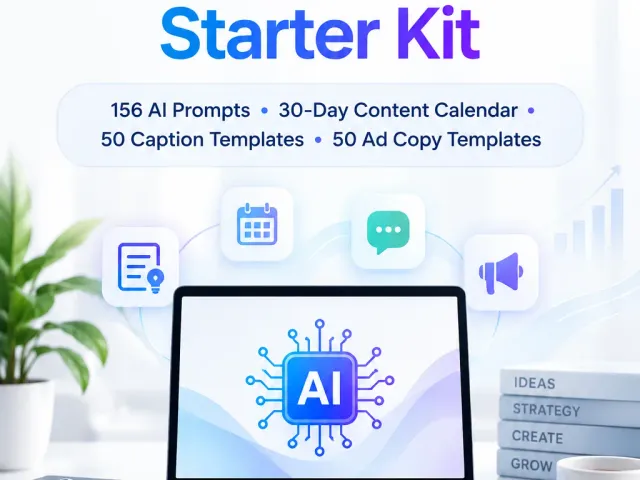
AI Content Creator Starter Kit – 156 AI Prompts & Content Templates
12 USDTA live digital-product example with a public offer and private buyer delivery.

Ai Tool Kit
9.99 USDTA live digital-product example with a public offer and private buyer delivery.
Put this guide into practice
Related Billixi solutions
Explore the workflow that matches this guide, including the public offer, delivery context, USDT checkout, and eligible distribution options.
Sources and product references
- 1Billixi: sell digital products with crypto
- 2Billixi solutions
- 3How digital product review works
- 4How to price a digital product
- 5How to sell ebooks and PDFs with USDT
- 6How to sell digital art and design assets with crypto
- 7How to sell printables with USDT
- 8How to automate digital-download delivery after crypto payment
- 9Billixi Refund Policy